Leaf cleanup in Owings Mills.
Need leaves cleared from your lawn, beds or walkways? Describe the areas and whether you need hauling to start a cleanup estimate request.
Request a leaf-cleanup estimateDefine the cleanup boundary.
“Remove the leaves” can describe several jobs. Walk through the property and mark the areas you want included. Build a cleanup note to bring those choices together for your request.
| Area | Detail to clarify |
|---|---|
| Lawn | Front, back and side areas; fenced sections and slopes. |
| Planting beds | Which beds need clearing and which plants or groundcover need care. |
| Walkways, patios and driveway | Which surfaces and edges are part of the job. |
| Other debris | Identify branches or other material separately so the provider can confirm what is accepted. |
Plan your cleanup
Build a leaf-cleanup note for your estimate.
Choose the areas and what should happen to the leaves. Continue with your note to the estimate request form, where you can review and add details. You can also go straight to the form.
On the form, review your project note and add your property city or ZIP, contact details and any access constraints. Add areas to leave untouched or other debris that needs separate assessment. If the note does not appear, use Copy note and paste it into the project description.
Building this note does not send a request or book a visit. Submit the estimate request form when you are ready; the work and availability still need confirmation.
What should stay, and what needs clearing?
A fall cleanup does not have to strip every leaf from the property. UMD recommends clearing thick leaf cover from turf; leaves can instead be moved to planting beds or shredded into the lawn where the pieces can settle between the grass blades. Read the Maryland seasonal guidance.
- Mark lawn and path areas to clear. Note heavy accumulations and access routes in your request.
- Identify beds where leaves should remain. Agree on those boundaries before cleanup starts, rather than assuming all beds need removal.
- Choose what happens to the excess. On-site reuse, County set-out and hauling are different scopes. Use the collection guidance below if you want bagged leaves left for pickup.
Known plant disease needs a separate cleanup plan. Leaves and stems from diseased plants should not be mixed into leaves you plan to reuse or compost at home. UMD explains that home compost may not get hot enough to destroy plant pathogens. Identify affected plants in your request, and agree on removal and disposal separately; do not assume routine leaf cleanup includes diagnosing or treating plant disease. See UMD’s guidance on which leaves to retain or remove.
Planning seeding as well? Check the grass-type timing for Maryland lawns and ask how cleanup will fit around that work.
Leaf collection, plant cutbacks, or both?
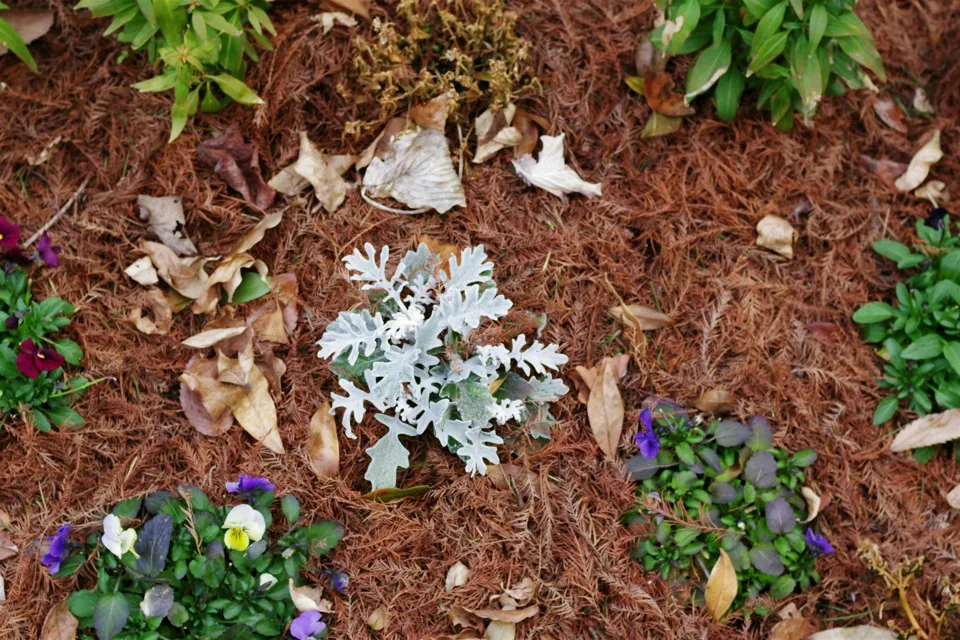
Clearing leaves from a bed does not have to mean cutting every perennial to the ground. UMD explains how standing stems provide winter shelter for pollinators. The plants, their condition and what you want to retain should shape the cleanup plan.
Before agreeing to work, identify plants and seed heads to leave standing, any cutbacks you want assessed, and where paths need to stay clear. Ask for plant cutbacks, leaf removal and any later visit to be listed separately. Keep the disease-removal question separate from healthy stems you want to retain; routine cleanup is not a plant-disease diagnosis.
New grass to protect?
If part of your lawn was recently seeded, note the date and mark those areas in your request. Young seedlings are easily injured, as UMD explains in its new-lawn care guidance. Agree how leaves will be cleared and where people, equipment and collected material can go before the visit. Do not assume the usual cleanup method suits new growth.
Agree on removal and disposal.
Ask whether leaf removal from your property is included in the estimate, where gathered material will be staged and whether any material is excluded.
A useful request: “Please quote leaf removal from the front and rear lawn and the beds beside the walkway. Include hauling, and tell me whether a second visit would be quoted separately.”
Leaf mulching, composting on site, bagging or curbside placement should not be assumed to be the agreed cleanup process. Confirm the method you want before agreeing.
Curbside collection or hauling?
These are different arrangements. If leaves will be left for Baltimore County collection, check your property’s collection schedule before choosing the cleanup date.
- On separate yard-material (“Y”) days, the County requires leaves in heavy-duty, two-ply paper lawn and leaf bags, with no more than 20 bags per collection.
- Keep leaves out of the street and storm drains. Do not assume a loose curbside pile will be collected.
- Ask who supplies bags, prepares the set-out and handles any material left after collection. If you want everything removed at the cleanup visit, have hauling listed in the estimate.
The County’s yard-materials guidance explains accepted materials and how collection changes outside scheduled Y days. Reviewed September 16, 2026; check the current rules for your address. County collection guidance does not confirm what a hired service includes.
Marks left on the patio after the leaves are cleared?
Leaf removal and surface stain treatment are separate scopes. Use the patio and driveway cleaning questions to describe remaining marks, the surface material and any known coating before requesting cleaning.
Do the gutters need attention too?
Clearing leaves from the lawn and clearing roof gutters are separate jobs. Use the gutter-cleaning estimate guide to describe visible overflow, building access and the areas to include.
Choose timing around the job.
A visit while leaves are still falling has a different scope from a final cleanup. Explain whether you want a one-time service or help across multiple visits. Ask how the provider handles more leaf fall, wet conditions and rescheduling.
Do not treat a published leaf-cleanup service as confirmed availability on a particular day. The provider must confirm that directly.
What can change the quote?
A fixed quote or a time-based rate?
If a proposal uses time, ask whether the rate covers one person or the whole crew, whether there is a minimum charge, and when billable time starts and stops. Clarify any separate visit, hauling or disposal charges. For a fixed quote, confirm which areas, leaf conditions and number of visits it covers, and what could change the price.
Compare the expected total for the same work, rather than an hourly or per-minute number alone. Have the pricing basis and any extras written beside the cleanup scope before agreeing.
- The areas included and the amount of material to collect.
- Access through gates, steps or narrow routes.
- Care needed around planting beds and obstacles.
- Hauling, disposal and any agreed additional cleanup.
- The number and scope of visits.
Ask how the areas, access, amount of leaves and disposal requirements are reflected in your estimate. Prepare a consistent brief to get a quote for your own property.
Questions for your estimate
Ask which areas are included, how access will be handled, whether hauling and disposal are included, and how any return visit would be quoted. Record the answers with your project brief.