Yard drainage help in Owings Mills.
Pooling water or runoff causing problems in your yard? Tell us where it happens and request help assessing the work needed.
Request yard drainage help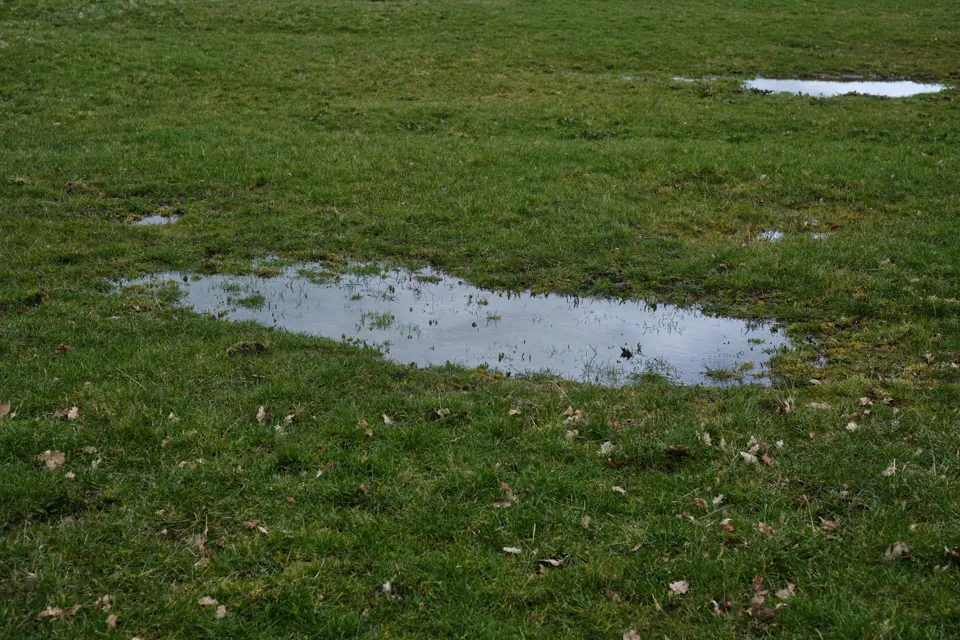
Start with what the water does.
Water collecting in your yard is a useful observation, but it does not identify the right repair by itself. Describe where it appears, where it seems to come from and what happens after rain stops.
A useful assessment connects the proposed work to the water problem you observe. Ask what a proposed drain or grading change is intended to address, and which issues need a different specialist.
- WhereMark the affected part of the yard.
- WhenNote when the water appears.
- What changesRecord what happens after rain stops.
Bring a rainfall observation record.
Use these prompts from a safe, accessible place. You do not need to take measurements during a storm. Keep separate rain events dated separately.
| Record | What to note |
|---|---|
| Location | Which part of the yard, path, patio or building edge is affected? |
| Timing | When did you notice it? How long after rain did it remain? |
| Visible flow | Where did you observe water moving from and toward? Mark uncertain observations as uncertain. |
| Nearby features | Note downspouts, visible drain openings, paved areas, slopes and planting beds. |
| Changes | Describe recent construction, paving, landscaping changes or previous attempted fixes. |
| Photos | Take a wide view and a closer view when safe; record the date. Avoid unrelated people and private details. |
| Access | Explain gates, fences or other constraints the provider should know before visiting. |
A dated observation record gives the provider something concrete to discuss without asking you to diagnose the cause.
French drain, catch basin or grading?
These terms describe different parts of a drainage proposal. More than one may be needed on the same property. Use the comparison to understand an estimate, then ask how the proposed work matches the water you have observed.
| Proposed work | What it does and what to ask |
|---|---|
| French drain | A buried drainage system commonly uses a perforated pipe and a surrounding material that lets water enter. Ask which water it is intended to collect, where it will discharge and how the system will remain accessible for maintenance. |
| Catch basin | An inlet collects surface runoff through a grate and passes it into connected drainage pipe. Ask which low area will feed it, where the pipe goes and who will clear collected debris. |
| Grading | Changes to ground levels reshape the route of surface runoff. Ask what levels and flow path will change, what must be protected and how disturbed lawn or planting areas will be restored. |
The outlet and surrounding property matter as much as the name of the drain. A drawing of the intended flow route can make two proposals easier to compare. Confirm any property-boundary, utility and local approval requirements before agreeing to work.
Questions about the proposed work
If a French drain, catch basin, storm drain system or grading work is proposed, ask:
- What problem is the proposal intended to address?
- What site observations support this approach?
- Where would water be directed, and what property or local requirements need checking?
- What excavation, materials, disposal and surface restoration are included?
- How will the work be checked, and what maintenance is expected afterward?
- What issues fall outside this proposal?
Compare the written scope before comparing totals. Two estimates may include different excavation, restoration or follow-up work. Use the estimate comparison guide to organize your questions. If the proposal includes digging, bring the utility and private-line questions to the scope discussion.
Is the concern a public drain or road?
A private yard-drainage estimate does not arrange work on a public drain or roadway. If that is where you have noticed the problem, use Baltimore County’s problem-reporting information to ask about the appropriate next step. The County lists 311 as a reporting option and notes that service requests are monitored during normal business hours; it is not an emergency response route.
For work within your yard, keep the location and direction of observed water in your estimate notes. Do not assume that an outlet can connect to a public system or cross a property boundary without the necessary checks.
Prepare your request.
Share your Owings Mills location, a short description of the issue, previous work and preferred timing. Ask how the provider wants photos delivered; the Mills Yard Guide form does not accept uploads.
Request an assessment and a written scope for your property. Pricing, availability and acceptance are confirmed by the provider.
Use the project quote checklist and review our local focus.
Request a drainage estimateAbout this worksheet
This observation worksheet helps you prepare questions for an assessment. It is not a diagnosis or a drainage design.